
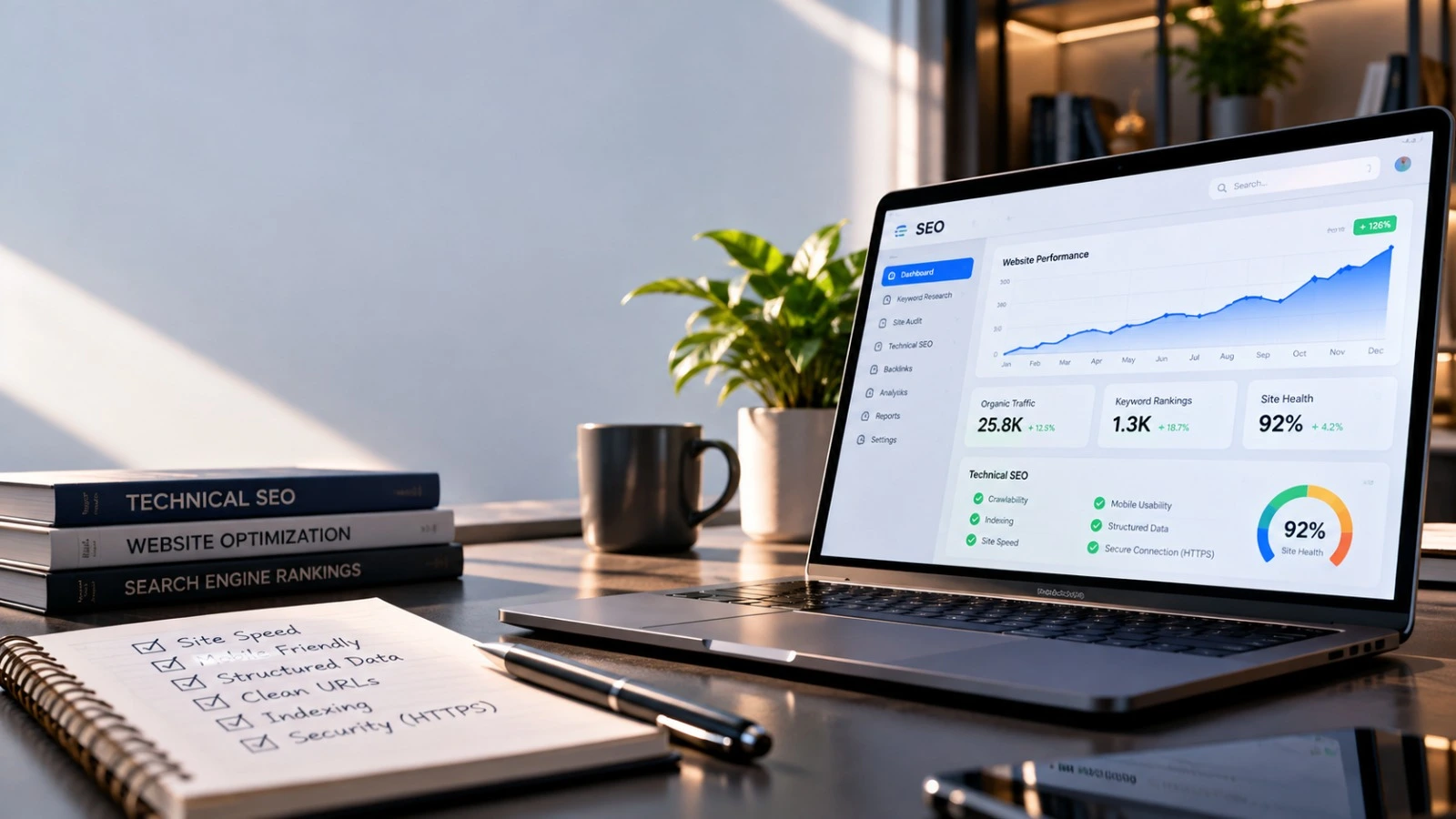
A website’s search performance depends on more than quality content and relevant keywords. A website’s underlying structure plays a key role in helping search engines locate its pages, access their content, understand their purpose, and include them in search results. Issues such as slow loading times, incorrect indexing directives, broken internal links and poor mobile usability can limit organic visibility, even when a business offers valuable products or services.
In 2026, technical SEO remains a critical part of a sustainable search strategy. Businesses must pay attention to website performance, structured data, multilingual architecture and the technical requirements of evolving search experiences. For companies operating in Dubai and across the UAE, these considerations are particularly important in competitive industries where customers rely on search engines to compare providers, evaluate services and make purchasing decisions.
Understanding the fundamentals of technical SEO helps businesses identify performance gaps and make informed improvements. It also provides a practical framework for evaluating the expertise of the best SEO company in Dubai, particularly when selecting a partner to improve website visibility, user experience and long-term organic growth.
Optimise Website Performance and Core Web Vitals
Page speed influences how soon users can view a website’s content and engage with its features. Delays in loading, unresponsive buttons and unexpected layout shifts can create a frustrating experience, particularly for mobile users.
Google uses three key metrics in Core Web Vitals to evaluate a website’s performance and user experience:
- Largest Contentful Paint (LCP): Measures how quickly the main content becomes visible. Aim for 2.5 seconds or less.
- Interaction to Next Paint (INP): Measures responsiveness to user interactions. Aim for 200 milliseconds or less.
- Cumulative Layout Shift (CLS): Measures unexpected visual movement. Aim for a score of 0.1 or less.
Improving these metrics starts with identifying the resources that slow down a website. Compress large images, use modern formats such as WebP or AVIF, reduce unnecessary JavaScript and enable effective browser caching. Images and embedded elements should have defined dimensions to minimise layout shifts.
For businesses targeting customers across Dubai, Abu Dhabi, Sharjah and other GCC markets, hosting and content delivery should also be reviewed against the locations of the intended audience. A suitable content delivery network (CDN) can reduce latency, while efficient server configuration can improve response times.
Tools such as Google PageSpeed Insights and Google Search Console help identify performance issues. However, laboratory test results should be considered alongside real-user data to understand how the website performs under everyday conditions.
Improve Website Crawling and Indexing
Search engines need to discover and access a page before they can evaluate it for inclusion in search results. Crawling and indexing problems can therefore restrict organic visibility, regardless of how relevant the content may be.
Start by checking whether search engines can access important pages and the resources needed to display them correctly. Review website settings regularly, especially after redesigns, migrations or major development updates, to ensure valuable pages remain available for indexing.
Canonical tags help search engines identify the preferred URL when several pages contain the same or very similar content. They help indicate the preferred version of a page, although search engines may consider other signals when selecting a canonical URL.
Redirects should be implemented carefully. Use permanent redirects for pages that have moved permanently, update internal links to point directly to their final destinations and avoid unnecessary redirect chains.
For UAE businesses with multiple service categories, product pages or location-specific landing pages, regular indexation checks can reveal whether important pages are accessible to search engines. Google Search Console is a useful starting point for investigating indexing issues and monitoring changes over time.
Establish a Clear Website Architecture
A logical website structure helps visitors find information and allows search engines to understand the relationships between pages. Poor navigation, disconnected landing pages and excessive URL duplication can make important content harder to discover.
Organise the website around clear categories and services. Main service pages should be accessible through appropriate navigation, while supporting blog articles should link to relevant service pages where they provide additional context.
For example, a digital marketing company can organise its SEO content around technical SEO, local SEO, keyword research, content optimisation and website development. Every article should meet a particular user requirement and include relevant links to related resources in a natural way.
Descriptive URLs, consistent heading structures and breadcrumb navigation can further clarify the organisation of the site. Internal links should use meaningful anchor text rather than generic phrases wherever practical.
Businesses targeting several UAE emirates should also avoid publishing near-identical location pages that differ only by city name. Each page should provide useful, location-specific information that helps potential customers understand the services available in their area.
Implement Relevant Structured Data
Structured data provides search engines with additional information about the content and entities represented on a page. When implemented correctly, it can help clarify the relationship between a business, its services, its articles and its physical locations.
Common schema types include:
- Organization: Describes a company’s identity and relevant business information.
- LocalBusiness: Represents eligible physical business locations.
- Service: Describes services offered by a business.
- Article or BlogPosting: Provides information about editorial content.
- BreadcrumbList: Represents the hierarchy of a page within a website.
- Product: Describes eligible product pages.
Choose schema types according to the actual content of each page. Markup should accurately reflect information visible to users and follow Google’s structured data guidelines.
Structured data does not guarantee higher rankings or enhanced search listings. Its value lies in providing clear, consistent information that search engines can interpret alongside the page’s content and other signals.
For local businesses in Dubai, accurate business details across the website and Google Business Profile can support a more consistent online presence. Schema should reinforce verified information rather than introduce unsupported addresses, services or claims.
Prepare Website Content for AI-Assisted Search
Search experiences are changing as platforms introduce AI-generated summaries and conversational discovery features. Nevertheless, AI search optimisation is not a replacement for established technical SEO practices.
Important website content should remain accessible as crawlable text, supported by descriptive headings, relevant internal links and a logical information structure. Avoid making essential service details available only through images, inaccessible documents or interactions that prevent users and search engines from reaching the information.
Content should answer relevant questions clearly and provide useful context. Original examples, expert explanations, transparent service information and reliable references can make a page more valuable than content that merely repeats commonly available information.
Businesses should also ensure that technical settings do not unintentionally prevent relevant crawlers from accessing public content. Bot access should be managed according to business requirements, security considerations and the intended use of the content.
There is no guaranteed technical method for securing inclusion in AI-generated answers. The practical priority is to maintain accessible pages, accurate information, strong internal linking and helpful content that meets users’ needs.
Maintain Mobile Usability and Website Security
Mobile usability is fundamental to modern SEO because Google primarily uses the mobile version of a website for indexing. If important content, navigation or internal links are missing from mobile pages, search engines may not receive the same information available on desktop.
Test page layouts across different screen sizes. Ensure text is readable, buttons are easy to use, forms work correctly and important content remains accessible without unnecessary interactions.
Third-party scripts also require attention. Live chat tools, analytics platforms, advertising tags and WhatsApp contact widgets can increase JavaScript execution and affect page responsiveness when poorly implemented. Review their impact and load non-essential resources efficiently.
Website security should be part of the same maintenance process. Use HTTPS consistently, resolve mixed-content errors and keep the content management system, plugins and server software updated.
Businesses collecting enquiries or customer information should also provide clear privacy information and handle personal data responsibly. These practices help establish trust and support a more reliable digital experience.
Monitor Technical SEO Performance Continuously
Technical SEO is an ongoing process rather than a one-time activity. Website migrations, plugin updates, new landing pages and changes to navigation can introduce problems that affect search performance.
Use Google Search Console to monitor indexing, organic search performance, Core Web Vitals and security notifications. Google Analytics can help connect organic traffic with enquiries, leads and conversions. Crawling tools can identify broken links, duplicate metadata, redirect chains and other technical issues.
When evaluating the best SEO company in Dubai, ask how the agency conducts technical audits, prioritises fixes, collaborates with developers and measures the results of its recommendations. A reliable SEO partner should explain technical findings in clear business terms and provide transparent reporting rather than guarantee specific rankings.
Conclusion
Technical SEO creates the foundation for effective organic search performance. Improvements to website speed, crawlability, indexing, site architecture, multilingual implementation and mobile usability help search engines understand a website while making it easier for visitors to access relevant information.
For businesses in Dubai and across the UAE, these practices should be aligned with the needs of local audiences, the demands of mobile browsing and the requirements of a multilingual digital environment. Regular monitoring and evidence-based improvements are essential to maintaining performance as websites and search technologies evolve.
Choosing the best SEO company in Dubai involves looking beyond promises of quick rankings. Businesses should prioritise technical expertise, transparent reporting, practical recommendations and a strategy that connects search visibility with qualified traffic and meaningful business outcomes.
A technically sound website will not guarantee top rankings on its own, but it gives valuable content and relevant services a stronger foundation on which to compete.